

I am teaching a new class at the University of Illinois. It is called “Strategies of Persuasion.” I should say that for me it is a new class. It’s been taught in our department for decades—part of our core curriculum. For a long time it was taught as an argumentation course. Then it was taught as a “public address” course (meaning, a survey of great speeches and great speakers). Now it’s time for me to assume the departmental role as the instructor of record for “Strategies of Persuasion.”
What am I going to do? It’s a good question. It will take me several tries, I think, to figure out this class. What’s the “Ned” approach? I am not quite sure.
But I can tell you what I am doing this week: I am trying to convince my students that persuasion is a really good thing.
Among the threads of cultural decline Civic Fields follows, the dearth of practices of intentional public persuasion is of primary concern. We currently are led by the least-eloquent president in modern American history (perhaps in all of American history). Trump doesn’t argue or persuade—he lashes out, insults, and rambles.
Yet, we voted for this. Twice. It’s as if we collectively said, “Give us vibes, not arguments.”
Why are we open to being nudged, pinged, algorithmically redirected, “influenced,” pitched, and even manipulated—but not persuaded?
I asked Merriam-Webster’s online thesaurus to give me synonyms and antonyms for “persuadable.” Here’s what it produced:
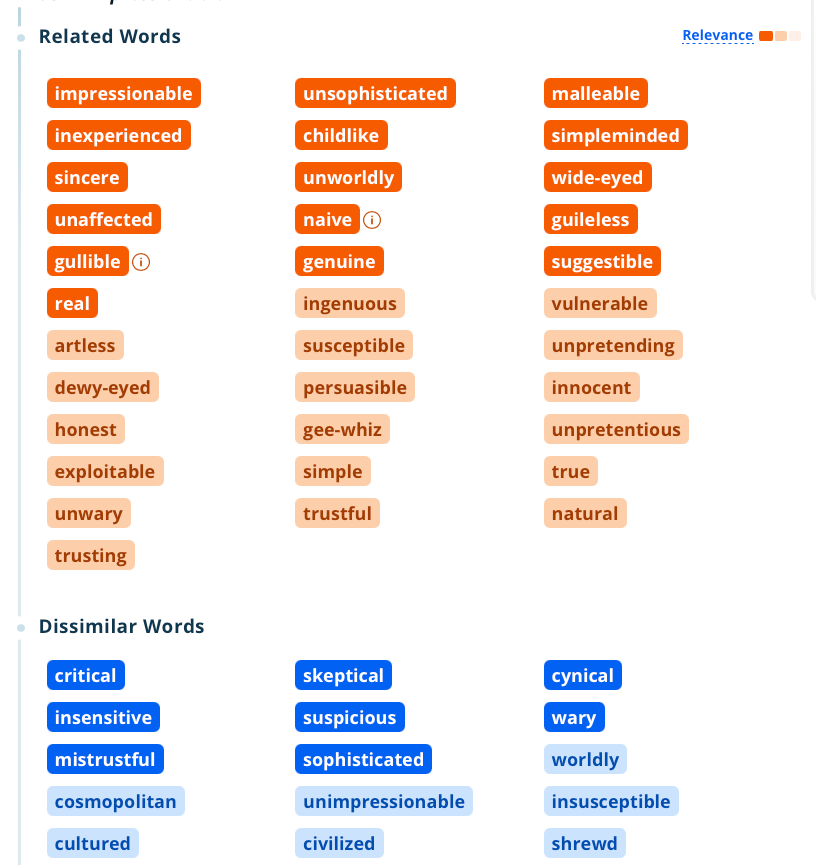
To be persuadable, according to this popular online source, is basically to be stupid and naive. And to be smart and sophisticated is to be unpersuadable. How odd! How remarkable! How awful!
What, Merriam-Webster, is wrong with persuasion?
Jane Austen wants to know. So does Aristotle, Cicero, Mary Wollstonecraft, Frederick Douglass, Maya Angelou, and many more.
Looking down on persuasion is, in one sense, a very old problem, indeed a “modern” problem in the sense of “modernity”—that era of history dating back to the Scientific Revolution and the Enlightenment. As many a book has chronicled, moderns are distrustful of persuasion; they supposedly prefer Reason, or so we think: we want 2+2 = 4 rather than arguments that chocolate is better than strawberry (and best when put on strawberries!).
But this is a modern myth. In fact, we clearly don’t prefer Reason. We prefer instead to be moved along by the winds of brands, images, influencers, and social media feeds. We prefer, it seems, not to be our own masters but nodes in profit-making networks of style and sentiment.
The reason persuasion is uncouth, I suspect, is because we doubt our own agency, the strength of our own selves. (Here again is my newfound Emersonianism rearing itself.)
Back in 2006, the political scientist Bryan Garsten published a book called Saving Persuasion in which he argued that democracies depend on citizens being persuadable.
What is entailed in being persuadable?
Garsten writes that an authentic persuader does not coerce, manipulate, or pander. Rather,
he merely puts words into the air. In the brief moments of conscious or unconscious reflection that occur while we listen to a sales pitch or a campaign speech, an active process of evaluation and assimilation occurs in our minds. We cannot make use of the energy of food, simply by coming into contact with it; our bodies must actively digest it. An analogous process of digestion must occur before a mind internalizes the suggestions of any speaker. Unlike actual digestion, however, mental digestion is a process over which we can exercise some control. We reject arguments that seem far-fetched or suspicious. . . . When someone sits back and decides, ‘All right, you have persuaded me,’ he is not merely describing something that has happened to him. . . . he is describing something he has done. (Garsten, 7, emphasis added)
Speakers, in other words, attempt to persuade audiences, but it is audiences that actually do the persuading as they weigh in themselves the arguments, motives, and character of the speaker.
Persuasion, that is, is about the agency of audiences, not just the power of speakers.
Therefore, the dearth of persuasion is not fundamentally a statement about speakers today, but about audiences.
Have we stopped believing in our capacity to weigh positions and form judgments?
Influencers are not persuaders. They do not typically make arguments. They model behaviors, styles, lingos, and looks. They are objects of imitation, not agents who defend positions and draw conclusions.
Most politicians are no longer persuaders. They are scratchers, finding the latest survey-tested itch and rubbing them with coarse words they hope will go viral.
The most powerful men in the world are not very good public persuaders. They are movers and shakers in elite circles. They often prefer force and threats over the work of persuasion.
Marketers are typically not persuaders. They are pop-psychologists, providing through packaging supposed need satisfaction: emotional security, reassurance of worth, ego gratification, sense of power or immortality.
Two weeks ago in this space I reflected on “decadence” and its antidote: uplift. I would like to see us stop trying to “influence” each other and instead work to persuade each other—for every attempt to persuade someone is an implicit acknowledgment of their agency and dignity.
It is a form of uplift.