

To me, the most striking thing about contemporary American conservatism is its incomprehensible incoherence. As a movement, American conservatism has always been riddled with tensions, indeed contradictions, but the great virtue of the movement until the last decade or so was that it tried to take its ideas to pen, paper, and paragraph for people to engage. Unlike so many in the American liberal establishment, conservatives refused to take ideas for granted. Theirs was a politics of persistent advocacy and effort, surpassed in force and depth only by the Civil Rights movement (to which so many conservatives, not coincidentally, were directly opposed).
But today’s American conservatism has been gobbled up by twits and tweets. Ideas in the movement today get about as many words as a McDonald’s menu. Contemporary conservatism has no core, just a collection of grievances and grunts. Ideology, yes. Ideas, no. (Not unless you consider “the great replacement theory” and “emasculation” ideas.)
I am not a conservative, not in any recognized contemporary sense. But I am deeply committed to the conservation of certain intellectual and political traditions, and I spend many of my days teaching both undergraduate and graduate students a curriculum centered around the classics of history that to many would look quite conservative.
This semester alone, for example, on the menu are Plato, Aristotle, and Tocqueville (as well as Paine, Wollstonecraft, and Martin Delaney). Meanwhile, I am writing a book that has lengthy sections on David Hume, Adam Smith, Edmund Burke, Walter Bagehot, and Walter Lippmann, all figures recognized within the conservative canon. Finally, I have been sharpened in my thinking by wrestling with mid-20th-century conservative thought, be it the free-market ideas of Milton Friedman, the natural rights argument of Harry Jaffa, or the hyper-individualism of Margaret Thatcher. All this to say, I am not conservative in any recognizable sense, but I engage with the conservative tradition because I respect it to a point. And I miss seeing the proponents of that tradition in the public sphere with actual ideas. Today, if they are there, they is crowded out by memes and deep fakes and attempts to distract.
There is, however, one advantage of having an ideology without ideas. It is fluid. Like water, it is drawn to voids. It is helpful to think of contemporary conservatism as a “negative-space ideology” or an “ideology of the void.”
We can learn a lot, therefore, about what is being neglected in contemporary society by paying attention to the places to which conservatism flows. Negatively, we are seeing it flow into racist spaces again, which tells me we have not done nearly enough here as a society to deal with racism. But conservatism is also flowing into poor rural America, the lives of young men, and the teaching of the classics—all of which desperately need more attention.
That last item—the teaching of the classics—may not be what you were expecting. But it’s been on my mind a lot.
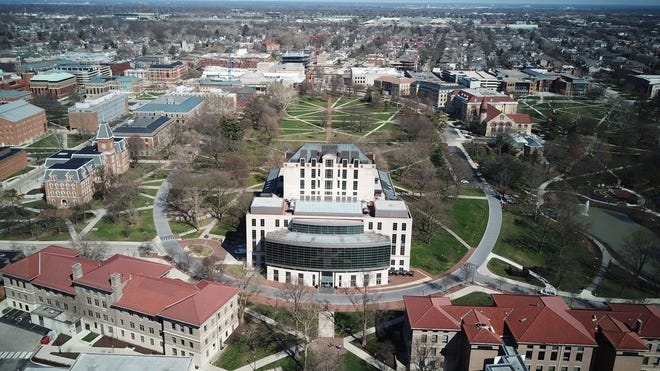
You may have heard that there are a group of new initiatives at public universities across the country aimed at creating departments, schools, or small colleges devoted to teaching a curriculum centered on the classics of the Western tradition. These are generally quite well-funded initiatives, backed by conservative donors and Republican legislators. They are already underway at the University of Florida, the University of Texas, Ohio State University, the University of Utah, Iowa, and elsewhere.
This, in its basic form at least, is one good idea coming out of today’s conservative circles.
These centers are filling a void. The fact is that you can pass through most public universities today in the United States without reading a bit of Homer, Plato, Aristotle, Adam Smith, Jefferson, or Lincoln. “So be it,” some may say (though, frankly, not many). “We are done with the Western canon.”
But the neglect of the canon means also that you can pass through most public universities today without reading an iota of Phillis Wheatley, Frederick Douglass, Elizabeth Cady Stanton, or Ida B. Wells. In other words, it is great thinkers that are being neglected, not the canon per se.
Why? The public university today, quite contrary to the conservative narrative, is not dominated by left-wing ideology. My university’s faculty, for example, can’t even come close to managing the most left-wing thing ever: forming a union!
Rather, the contemporary university is dominated by a technocratic liberalism that puts a premium on making young people useful members of the white-collar work force.
That is, the reason that the classics are not systematically taught in public universities is not that faculty hate “Western Civilization” but because administrators, professional advisors, and student services have little imagination beyond “getting a job.” After all, that’s what students or students’ parents are paying tuition for, right? I have literally been told that as a professor.
So, while some of the opposition to these conservative-backed humanities units popping up on campuses can get quite alarmist—as though they represented a Right-wing incursion that threatens the heart of higher education—the truth is that they are filling a void at public universities, and a pretty big one at that.
In this way, they could be doing public universities a great service by calling attention to a big hole in public higher education. They are saying, presumably, that public higher education needs to be about more than “getting a job.” It needs to include engaging with big ideas, great debates, civic lessons, and the tangled mess of history. To get a college education, in short, means learning how to think with and alongside civic and intellectual traditions. Amen!
I truly hope these centers are successful in pushing such a broad humanities-based philosophy of higher education into the public university mainstream. If they are, I don’t care if they are backed by Republican money, or even if they are staffed by a majority of white males who feel disenfranchised by the academic establishment. They will have done public university education in this country a great, great service.
But I doubt they’ll be successful in this way, and for two big reasons.
The first is that technocratic university administrators are generally tone deaf to anything but that which harmonizes with the hum of industry and the job board. They have come to see the public university fundamentally as an economic engine, even if they sometimes say otherwise. Sure, if we are able to throw into university-based job prep a bit of diversity training, great! But even that diversity training, in form, must be consistent with corporate diversity training. In other words, “woke” ideas have only been welcome in the university as long as they are consistent with the ideology of the white-collar job world. Nothing in the technocratic liberalism of public university administration seems capable of resisting the economic imperative.
It is not just that many university administrators lack imagination and guts. It is that they are playing to a field—legislators, governors, and the people who elect them—that has learned to justify education, especially higher education, only in economic terms. And this was largely a Republican Party accomplishment. Go figure.
But the other reason I think these centers will fall short is that they themselves are playing to an equally restrictive field. They are bound by the commitments of those who fund them, and those folks have an agenda, not a mission. Funders hope to produce “conservatives” on campus and beyond.
If these centers leaned all the way in to what they professed—the Western tradition, intellectual freedom, civics—they would be systematically unable to produce anything resembling ideological coherence, Right or Left. For the classics on the whole do not offer us anything like an ideological program—just big ideas and great questions.
I teach Plato. This week I have about 115 undergraduate students reading a section of Plato’s dialogue Gorgias. But there is no way to honestly teach Plato that results in a coherent ideology or political worldview. Teaching Plato well results only in big questions and major debates, fascinating ideas, and critical arguments. Indeed, that’s why I teach Plato. My goal is to teach students how to think. There are few better guides than Plato.
I know that something like this is genuinely going on in some classrooms in these conservative-backed start-ups on public university campuses. But I also know that the faculty there are not free to truly let loose, despite the mantle of “intellectual freedom” these places wear.
Teaching and reading the classics well could easily lead one to directly challenge the forms of social and political power of the enriched elites that fund these centers. In Plato’s Gorgias, for example, the villain is Callicles, a rich young man full of a sense of his own rightful privilege in society. Callicles is a “type.” He is the sort of rich aristocrat in Athens who sought to kill poor Socrates (recall, Socrates refused to profit from his teaching). Indeed, Socrates, with all his annoying questioning, appears to me an archetype of the ideal democratic citizen—someone who wants to get to the bottom of things and will not be kowtowed by the rich, no matter what.
This indeed is just the sort of thing that public universities should be teaching to their students as a matter of course. So, I wish these start-ups success. And I hope that the liberal technocrats will feel threatened enough by the Right-wing encroachment into the humanities that they will want to counter with force and gusto. It would mean that what I teach would no longer be a tiny enclave in the big university, but near its center. It would fill a void.