

Last week, I had the joy of getting to sit and listen to one of the world’s finest media scholars talk about social media and its effects on public discourse and social (in)cohesion. The scholar was John Durham Peters, now at Yale. The topic, at least according to the publicized title, “Considering Forgiveness in a Time of Ubiquitous Recording.” The hosts were the Department of Philosophy and the Institute for Communications Research here at the University of Illinois, Urbana-Champaign.
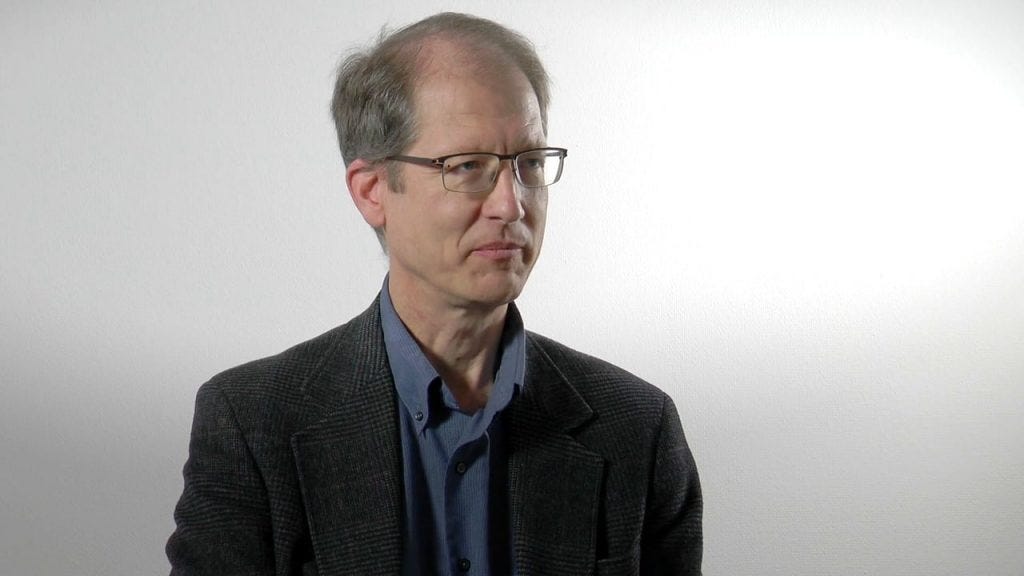
I don’t know if the talk will ever be published or posted online, but even if it were, I suspect that it might not get the attention it deserves. Peters is a poetic thinker as well as a critical and philosophical one. The influences behind his intellectual style run from Martin Heidegger to Jacques Derrida to Marshall McLuhan and Friedrich Kittler. As he himself has written of a famous scene in Woody Allen’s Annie Hall, in which McLuhan appears on screen just as his ideas are being roundly dismissed by a character playing a loquacious Columbia University professor,
The blowhard [the professor on screen] had reduced McLuhan to a set of ideas, a doctrine, or message, but McLuhan, ever the meta-artist, showed that it was all about the act, the twisting of grammars, the medium. McLuhan never claimed to have a point of view: as a latter-day sophist he could conjure dissoi logoi (contrarian terms) at the drop of a hat. McLuhan had a knack, a bag of tricks, not a philosophy, a set of tenets. He knew the truth sometimes had to be lured forth.
John Durham Peters does, I think, have a philosophy, a set of tenets, but he frequently expresses them much in the way McLuhan did: idiomatically, idiosyncratically, and insightfully. In last week’s talk, John walked us through a set of social media clips and news headlines, reflecting on the way in which social media and “ubiquitous recording” (i.e., we all carry cameras now and nearly every form of digital communication is surveilled by some entity) have turned the world into a massive congress of anxious amateur forensic scientists.
What follows here are some takeaways from Peters’ talk that I think need broadcasting and processing. (Note, when I use the word “media” in what follows, I am not talking about “the media,” as in CNN or Fox, but rather media technologies—for example, radio, television, or social media.)
First, Peters argued that media are moral agents. “Technological determinism” is widely used as a slur. It is seen as a form of fatalism, stripping agency from humans, reducing us to cogs in a machine. We’d much prefer to think of technologies as neutral tools where agency and responsibility sit squarely with the users. Witness the way we talk about guns. But Peters argues that we should take technological determinism seriously. In Peters’ words, “media transformations have moral consequences.” Technologies, including innovations in media, are engines of possibility. They create social and (im)moral possibilities without necessarily directly causing them. For example, the mass shooting, understood as an immoral act, was made possible by developments in gun technology without directly being caused by them. Peters called this the “middle voice” of technological determinism: technologies are not solo actors, but neither are they mere passive receptacles there to be “used.” They actively shape and constrain the possibilities non-technological agents have for acting.
Recording media, Peters argued, produces “sticky” communication. Specifically, Peters argued that recording media produce interpretive stickiness—that is, a capacity to attach themselves to multiple, often contradictory, interpretations all at once.
Here Peters referenced the work of Friedrich Kittler, who in his 1999 Gramophone, Film, Typewriter, argued that in the 19th century, new forms of recording media—for example, the camera and the phonograph—allowed for the capture and storage of “noise.” Prior to these new 19th-century technologies of recording, almost all communication at a distance, and all recording, depended on signs (that is, written scripts, symbols, or letters), making communication identical with coding and decoding (what we’d call writing and reading, respectively). But the rise of recording media meant the capacity to capture extra information, often accidentally or unintentionally, at least from the perspective of the recorder/communicator. For example, a photograph of William Howard Taft throwing out the first ball at a Washington Senators baseball game in 1912 (seen here) could well raise questions about Taft’s athleticism, or lack thereof, a topic that would have seemed a non sequitur if all one had was a telegram message, “Taft throws out first ball at Senators’ game.” Recording media, Peters argued, are “interpretively sticky”—they attract debates and forms of attention that written words elide. Thus, “a picture is worth a thousand words” might be understood literally.
Therefore, in a society like ours, where the artifacts of recording media are posted everywhere, we find ourselves endlessly discussing and debating texts or images the meaning of which would seem obvious or transparent. For example, Elon Musk’s and Steve Bannon’s Nazi salutes: was it serious, irony, an accident, a joke?
We also find ourselves preoccupied in public discourse with seemingly tangential topics. What was up, inquiring minds wanted to know, with Amy Comey Barrett’s supposed “stink eye” when Trump walked by her at the State of the Union last March? Or what was up with Adrien Brody throwing his gum to his girlfriend at this year’s Oscars, The New York Times wants to know. Or does Zohran Mamdani really respect Hindus, given that he wore shoes when he visited several temples?
Peters argued that while some of these debates may have merit, in their sum total they render the world a grand congress of amateur forensic scientists, Forensic Files gone wild (my tag, not his). “Conspiracy” thinking has become the norm, not the exception. We are all are starting to believe there’s something behind the curtain, even when the curtain is a Nazi flag staring us in the face.
Those who are able to succeed in public in this world are those who can generate noise: making it about Justice Barrett’s look rather than her rulings, Brody’s gum rather than his cinematic performance, Mamandi’s shoes rather than how his policies might help or hurt New York and its Hindus, or the sensitivity of liberals rather than revelations of antisemitism and racism among Trump administration officials and Republican Party activists.
It also puts unreasonable and wasteful demands on citizens. Rather than being asked to form opinions about matters of broad common concern—immigration, health care, policing, foreign wars—we also, it seems, need to have opinions about looks, gestures, hair styles, clothing choices, makeup (too much? too little?), bicep size, or whether a Trump nominee’s claim he has a “Nazi streak” was a joke. Peters didn’t talk directly about this, but Trump’s television-casting approach to high-level administration officials makes it clear that the president understands that this is where public discourse is at. It’s all about recording media; that is, it is all about the noise. As I’ve said here on Civic Fields before, the noise is the signal.
What I appreciated most about Peters’s talk was his frank acknowledgment about just how confusing and incoherent all of this is. He is a brilliant man, a scholar of media, and yet he finds himself throwing up his hands about our current political moment. We are experiencing a form of collective social insanity.
What to do? Peters suggested, without directly arguing the point, that there is a much stronger role here for the state in regulating social media—specifically, getting rid of Section 230 of U.S. law, which protects social media companies from liability laws. Part of the problem of digital media is the breakdown of policing, he argued. Policing public discourse has become a kind of mob activity called “doxing” or “canceling.” The state is losing its monopoly on policing public discourse.
But part of the problem, he suggested, is more fundamentally temporal—having to do with the speed of social media. We have entered a world where we can no longer learn in public because social media has collapsed public time into a tyrannical “now” where praise and blame are immediately (and often unreflectively) meted out. Social media is designed to move fast and break things. There’s always an Update, a Refresh, a New Thread. Therefore, there is little room for trial and error, hard knocks, self-correcting, repentance, or forgiveness. Everything needs to be mercilessly and decisively arbitrated now. The only people who can thrive in this kind of social environment are shameless.
Peters ended his talk by discussing Matthew Ichihashi Potts’ recent book on forgiveness. It is not a book that I have read, so I will not comment on it. But what was clear from Peters’ comments about it was that forgiveness takes time.
I walked away from his talk, therefore, thinking less about “Considering Forgiveness in a Time of Ubiquitous Recording,” the title of Peters’ talk, and more about “Considering Forgiveness of Ubiquitous Updates.” Perhaps more than policing content, we need to figure out ways to slow media down, establishing for it the equivalent of speed limits. Right now, unfortunately, that burden falls on us as users. I’d never advise people to drive a car with two feet, one on the gas and one on the break. But that’s exactly how we need to drive our media engines.