

Sometime several centuries ago, political philosophers and social theorists conceived of a new way to account for human behavior and attitudes. Whereas for eons philosophers thought people were motivated by virtues or vices, these new social theorists argued that people were fundamentally motivated by “interests.” People, they said, do not so much act to achieve what is good with a capital “G,” or bad with a capital “B,” but rather to acquire what they perceive is good for them—their “interests.”
This new idea grew to be the dominant theory of human motivation. It still reigns today, typically set in an economic frame. We are, loosely speaking, rational actors seeking our own individual goods or “interests”—or so the theory goes.
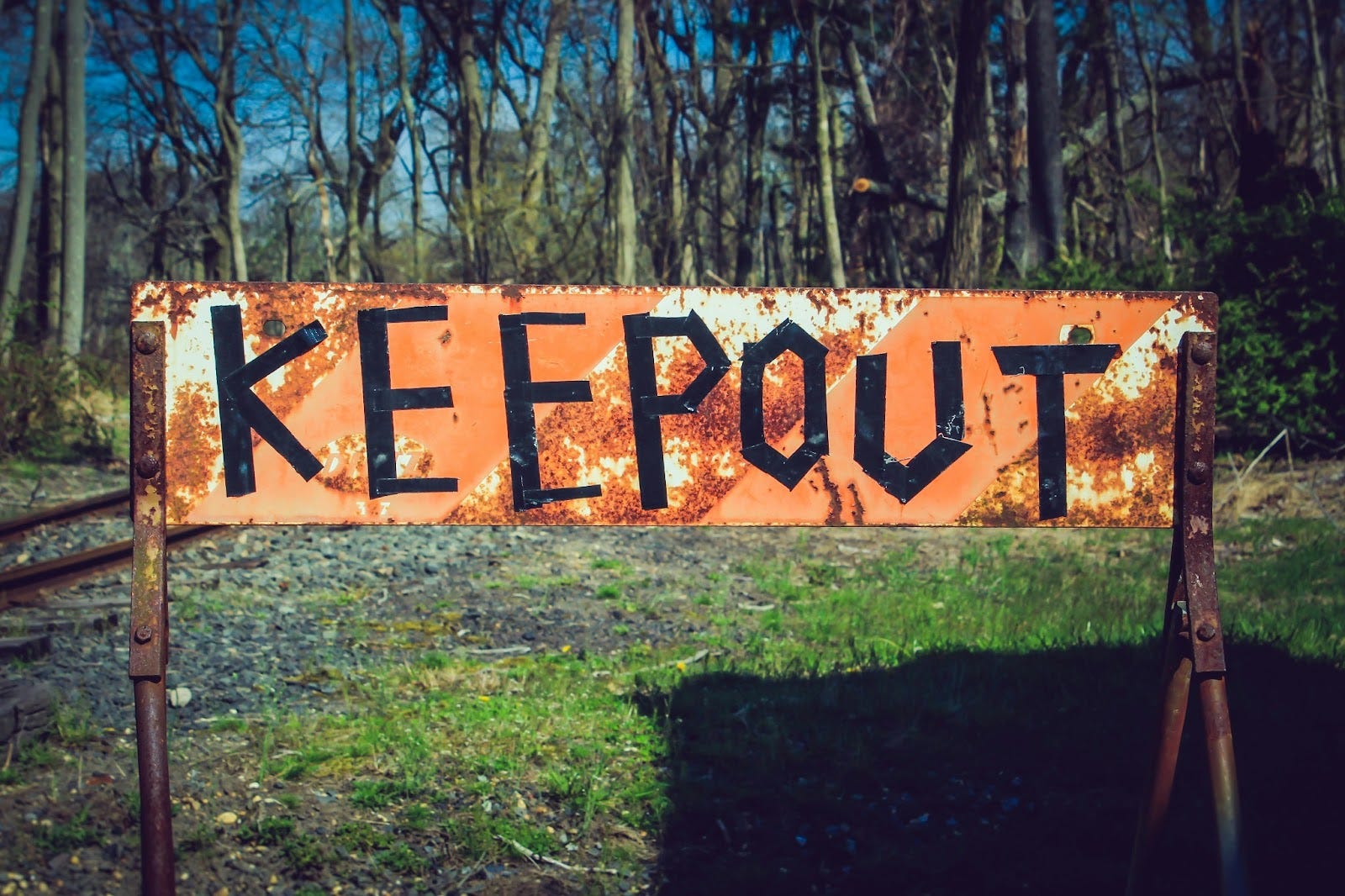
This is still the dominant theory today for explaining different beliefs and political behaviors among the American electorate. It’s all a matter of “interests,” or at least perceived interests. Hence, voters in Kansas vote the way they do because of their perceived interests, and voters in California do the same. Rural folk are divided from suburban people and urban residents according to a logic of “interests.”
I’ve lived in three very different kinds of places: a tiny township, a small city, and a major coastal urban area. My experiences in these places lead me to think this “interest” theory of human behavior is off, maybe even by a lot. More important is what it feels like to live in a place.
I grew up in Silverdale, Washington, an “unincorporated township.” It’s nestled in the woods on the Olympic Peninsula and is mostly shaped by the military base and naval shipyard nearby, as well as proximity to Seattle. It’s a community, for all intents and purposes, that’s been formed by the United States’ growth into a world military power. In it, engineers rub shoulders with soldiers, and both engineers and soldiers interact with schoolteachers, doctors, and convenience-store clerks. But all on a relatively small scale.
Then I moved to Champaign-Urbana, Illinois, an area made up of a couple of hundred thousand people, one in three of whom are students. The little “twin cities,” as they are called, are really three different and distinct towns. Urbana was founded first and is the county seat. Its residential center is made up of sleepy tree-lined streets. But when the railway came through in the 1850s, the tracks were laid two miles away, and a new city sprang up, Champaign. Bifurcating the two towns today is the University of Illinois, or “Campustown.” It’s where university undergrads live, eat, and drink. To live in Champaign-Urbana, therefore, meant for me moving among three distinct spaces, each with different histories and a different sense of belonging.
When I moved to Boston, it felt way different from both Silverdale and Champaign-Urbana. The first thing that stood out was its conspicuous history. Walking home, I see the Bunker Hill Monument every day. I ride the bus over the greenway, where the highway used to cut the city open like a wound. The history of Boston exerts itself on its citizens all the time: through spaces, through stories we tell ourselves about ourselves, and through forms of sociability and publicness.
Its unique history overtly informs Boston’s built environment, but its day-to-day social patterns are typical of densely populated areas. For example, there’s the fundamental anonymity of the large crowd. People don’t know you as you walk by or sit on the T, and they don’t necessarily want to know you. This can be isolating, or freeing, depending on how much you want to be seen and known by the people around you at any given moment.
So there are ways of feeling the presence of others, unique to a big city.
But I also keep thinking about the way property feels in urban versus suburban and rural places, and I wonder how this influences our deep cultural and political divides in the United States. In an urban area, what’s “yours” is a little narrower and circumscribed than where I grew up. I certainly feel my apartment to be a private place, but it is surrounded by common areas like hallways: where I pass by neighbors, or where I can smell what they are cooking for dinner, or where I can hear their dogs barking. Compared to living out in Washington State, where a car coming down our driveway was a strange and uncommon experience, “my” space in Boston is much more open to others passing through or interacting within it.
So too with public transportation, public pools, parks, playgrounds, and the sidewalks. I am constantly confronted with the use (and misuse) of space around me. Space in a city is not a free-for-all, at least not most of the time. Rather, city life is a patchwork of different kinds of spaces, each of which has a different feeling reflecting an accreted history of urban design and neighborhood politics.
There are private gardens carved out of easements and also community gardens. Some buildings have private roof decks, and some neighborhoods have public pools. There are “parking wars,” the term Charlestown residents have coined for trying to get a spot to parallel park along the street. There is music coming out of windows, cars, and storefronts. People are speaking to each other and sometimes shouting at each other across the street. These interactions are not all fun or even good, but they’re always there. Plenty of the townhouses have Ring Cameras and locked gates to the alley between buildings. My older Townie neighbors talk about how the easements and interstitial spaces between the buildings all used to be connected, and kids could freely roam from one to the other. Now they are closed off and private. Kids still walk to the park, though, to practice lacrosse or just to sit in the bleachers or to play soccer.
Perhaps the difference among the forms of sociability and publicness across urban, suburban, and rural areas is ultimately about differences in perceptions of control.
You have much less apparent control over the soundscape or who is around you in the park or on the sidewalk in a city, compared to a suburb or a small town. Asserting control, motivated by a sense of security for self or children, or motivated by a desire to have stability in interactions or spaces, isn’t in and of itself a bad thing. Different people feel like they need different levels of security over space, interactions, or property. But I think the discomfort, or even fear, many people have with cities is about this different level of perceived control. Compared to the solitude of driving your own car to work, walking or taking the bus or metro means that you are going to have to deal with people who are talking to you, or to themselves, or to other people next to you. Compared to the solitude of a suburban or rural home, my commute, like my apartment, is a social space not entirely in my control.
I don’t want to suggest here a cosmic or a lovey-dovey view of urban connectedness. Sometimes being in a city is hard, and sometimes people in public suck, and sometimes folks take advantage of publicness in ways that make it hard for others to enjoy or exist there with them. But for me, I’m less interested in establishing a solitary place free from other people’s potential negative influences. Living in a city feels political because it invites an expansion of the political unit: of course, the “mine” still matters, but so does the “ours.”
Feelings about property and differences in perceived control: these are critical political matters. And they shape political sensibilities. Why are urban areas “blue”? The “interest” theory would say that urban areas need more social services, and Democrats are for social services, whereas Republicans are not. By contrast, the “feeling” theory I am exploring here might say that simply to navigate a city requires more of “us” and “ours” than “me” and “mine,” and Democrats have historically been more closely aligned with a social-democratic political vision than Republicans. Living in a city is living with a sense that we are imbricated together in ways large and small, for better or worse. You have to learn to navigate a fundamental form of connectedness, so you want to make sense politically out of connectedness, make it meaningful.
What is a political act? A pursuit of interest, or an attempt to make sense of one’s experiences? Is it possible that meaning-making matters more than getting what’s in a person’s economic interest? Everything in America’s voting patterns over the last several decades suggests so.
