

The government shutdown is now a month old. One of the eerie qualities of the last month for me has been how little the shutdown seems to have mattered to most Americans. Polls I’ve looked at show little reaction one way or another to the government not operating. And our president has been behaving like he really doesn’t need Congress to exercise its power over the purse at all—“donations” will do.
This will all likely soon end—on November 1, the pain is going to set in. But it might be a good time to ask why we have a Congress at all, and what we can do, if anything, about its current dysfunction?
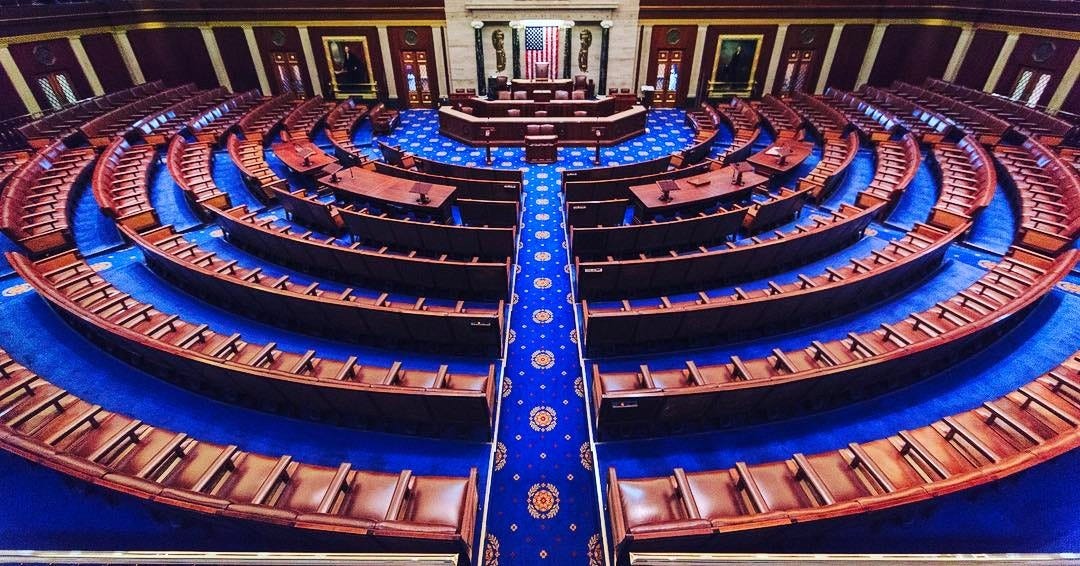
Last spring, I read Why Congress?, a book by Philip Wallach, a fellow at the American Enterprise Institute. I recommend it for folks of all partisan or non-partisan stripes. It is a historically rich and policy-smart text, the sort of thing that think tanks do at their best. The basic argument of the book is that Congress was created to be a political body, but that it has, over the last fifty years, become a party body.
Wait a minute, you might say: I thought politics was about partisanship. Isn’t being a political body the same as being a party body?
Not quite.
Political parties are mechanisms for organizing and directing political power, but they are not necessarily political bodies. To be political, they have to be able to generate power through the give-and-take of difference. This is Wallach’s Madisonian thesis. And it is one echoed in the works of one of my chief influences, Hannah Arendt.
Politics, in Wallach’s words, is a process wherein “disparate interests, conflicting visions of the good, and divergent judgments about prudent policy” come into contact with each other, get worked through, and reach provisional compromises. Or, in Arendt’s phrase, authentic politics is “different people getting along in the full force of their power.”
Our two political parties, in fact, are not very good at doing this kind of work at all. They are top-down organizations. They operate more according to the command structure of a corporation than the horizontal openness of a town hall meeting.
But Congress, Wallach argues, was created to be a political body more than a partisan one. His book takes us back to the founders, particularly James Madison, to argue that Congress, as the only representative branch of government (n.b., the presidency was not created as a representative branch of the federal government), is the sine qua non of Constitutional political order, the branch without which we cannot function as a democratic republic.
As it was originally conceived, Wallach argues, Congress offers,
the promise of taming interests through structured competition and dialogue with each other. Congress is not perfect, nor does it solve problems with great efficiency. It is all too human. But Congress’ shortcomings do not render it a constitutional liability. Rather Congress’ plural, representative nature makes it the only body in our system capable of setting our national priorities while respecting the diversity of our vast citizenry.
And his book shows through careful historical case studies centered on the 20th century that this is more or less how Congress has functioned in the United States at crucial moments in its modern history. Hence, it is not a pollyanna view of Congress.
Nevertheless, the problem facing us now is one of which Madison was only barely aware, and which Wallach does not address squarely enough. Madison warned of “factions.” But factions looked nothing like modern political parties, and political parties at his time looked nothing like today’s. Madison lived in a day when, loosely speaking, political parties existed, but they did not have any of the organizational and operational fortitude that they do nowadays. They operated more like social clubs than corporations.
Some, like Ezra Klein, therefore say the Constitution is simply not prepared to deal with modern political parties. I am less certain about this. The Constitution is far more flexible than many allow. Even an “originalist” must admit this if they are being honest. And Wallach agrees with me on this. Congress could get fixed within the bounds of the Constitution even with the particular force of modern political parties in full view.
Indeed, Wallach focuses much of his analysis on the rules that Congress sets for itself. The filibuster, of course, is the most famous Congressional rule, but there are many, many others. And they are quite open to change. Congress could fix itself in a day if it wanted to, and in so doing help fix the country.
Instead, as Wallach chronicles, over the last thirty years, Congress has chosen of its own accord to consolidate power in the hands of a tiny group of House and Senate leadership. Congress, with its wide-open floor and its lecterns for debate, has become a top-down institution. Bills are now made in tucked-away committees, not in the full chamber or among loosely organized coalitions, and these committees can “kill” bills by simply refusing to act on them. Today, there is really no such thing as open debate in Congress about legislation. Most senators and representatives never read the legislation on which they are asked to vote. They overwhelmingly follow the party line, heeding dictates from above. “Party boss” politics has been re-institutionalized in American government (this was a problem, too, in the late 19th century).
This is not a problem of the Constitution, at least not directly. It is about the rules Congress makes for itself. Indeed, Wallach’s point is that the current top-down rules fly in the face of the spirit and letter of the Constitution. Congress is given its power and place in Article 1 of the Constitution—it is to be the supreme body of the federal government because it is the only truly representative body. And yet it has relegated itself to the position of Article 3 or worse, choosing to be an extension of party organization.
The current Trump-led effort to redistrict House districts to assure Republican victories, and the tit-for-tat response of Democratic states, represents the nadir of the anti-representational thrust of partisanship. Leaders of our political parties are working to consolidate their power by denying us any electoral power whatsoever when it comes to federal elections. Soon we will all be living in the Boss’s neighborhood.
What to do? It would be nice if Congress would simply fix itself, but that’s not likely to happen apart from the sort of national catastrophe that none of us wishes for.
I wish I had grassroots solutions. The fact is that the two major political parties are wildly unpopular for a plurality of Americans. There might, just might, be some hope here for a diminution of party power in favor of political power. But I am not especially hopeful on this front. Some political Independents are what they are because they feel alienated from the two major political parties. I am one of these. But I suspect that most Independents are just checking out of politics, sick of it all. These are not the kind of voters, in general, who are going to drive a grassroots movement. Indeed, the apathy of Independents only makes the parties more powerful.
Rather, any hope of change, apart from catastrophe, comes down to leadership.
Earlier, I said that political parties are mechanisms for organizing and directing political power. But they do not have a monopoly on political power. It is not even clear that they can effectively generate political power. This is key.
Part of the lesson of contemporary populism is that political parties have to latch on to popular political power. They are, in a way, fundamentally parasitic. You can’t really create a popular movement top-down, astroturfing style, though sometimes these approaches have had some limited success. Instead, those at the top need to find sources below for political power, attempt to capture it, and do with it what they will.
Donald Trump, with his predatory genius, has been a master at this. Trump is where he is at because he captured a political party. But he captured a political party because he succeeded in parasitically attaching himself to popular political frustrations and grievances.
But I don’t want another Trump anywhere—not on the Left or the Right.
What we can learn from Trump, however, is the power of party insurgents—party outsiders who, through popular appeal, become party insiders and redirect the party apparatus according to their aims, wishes, or desires. Given that our two major political parties are centered in the White House—either because their leader is the President or because their party leadership is being fought over in terms of who will run for President—the place to look for party insurgents is in the presidential primaries. Those are still several years away.
But what I will be looking for is a reform insurgent in the order of Teddy Roosevelt in the Bull Moose campaign in 1912, or, for that matter, Lincoln in 1860. We need leaders with charismatic appeal who actually care about the Constitution. And we’ll know if they do, not by their positions on gun control or abortion, but by their view of Congress and Congressional reform. If that sounds like a far-out possibility, it is an indication of just how far out of order our polity is.