

Dear Friends,
Here at Civic Fields, I am loath to stay too timely! Part of what we are up to here at Civic Fields is to be current without being too caught up in the news cycle. There is ample punditry out there. By training and vocation, I am a scholar, historian, and political theorist, not a journalist. I don't have the temperament to be big on social media, or big even on Substack here. It’s just not me.
Yet, this morning I’ve been getting pinged and called about my thoughts on what’s going on with the war on Iran. Rather than wait till Thursday, here’s what I’ve been saying, in sum.
First, I am not surprised, not at all. This has been in the works for months. The only reason it did not happen last summer when Israel and the United States struck Iran’s nuclear sites was because Israel was not ready to take on another prolonged war. The “cease fire” with Palestine, in addition to giving Palestinians a modicum of relief, has allowed Israel to prepare itself for war with Iran. The United States under Trump was ready all along.
Second, what is happening today is entirely consistent with neo-royalism. If that term is a bit foreign to you, you might revisit the Civic Fields post from a little over a month ago, “Internationalizing the New American Royalism.” Just replace “Venezuela” there with “Iran.” Trump & Co. are after a “clique change” in Iran, not a regime change.
As I wrote some friends this morning,
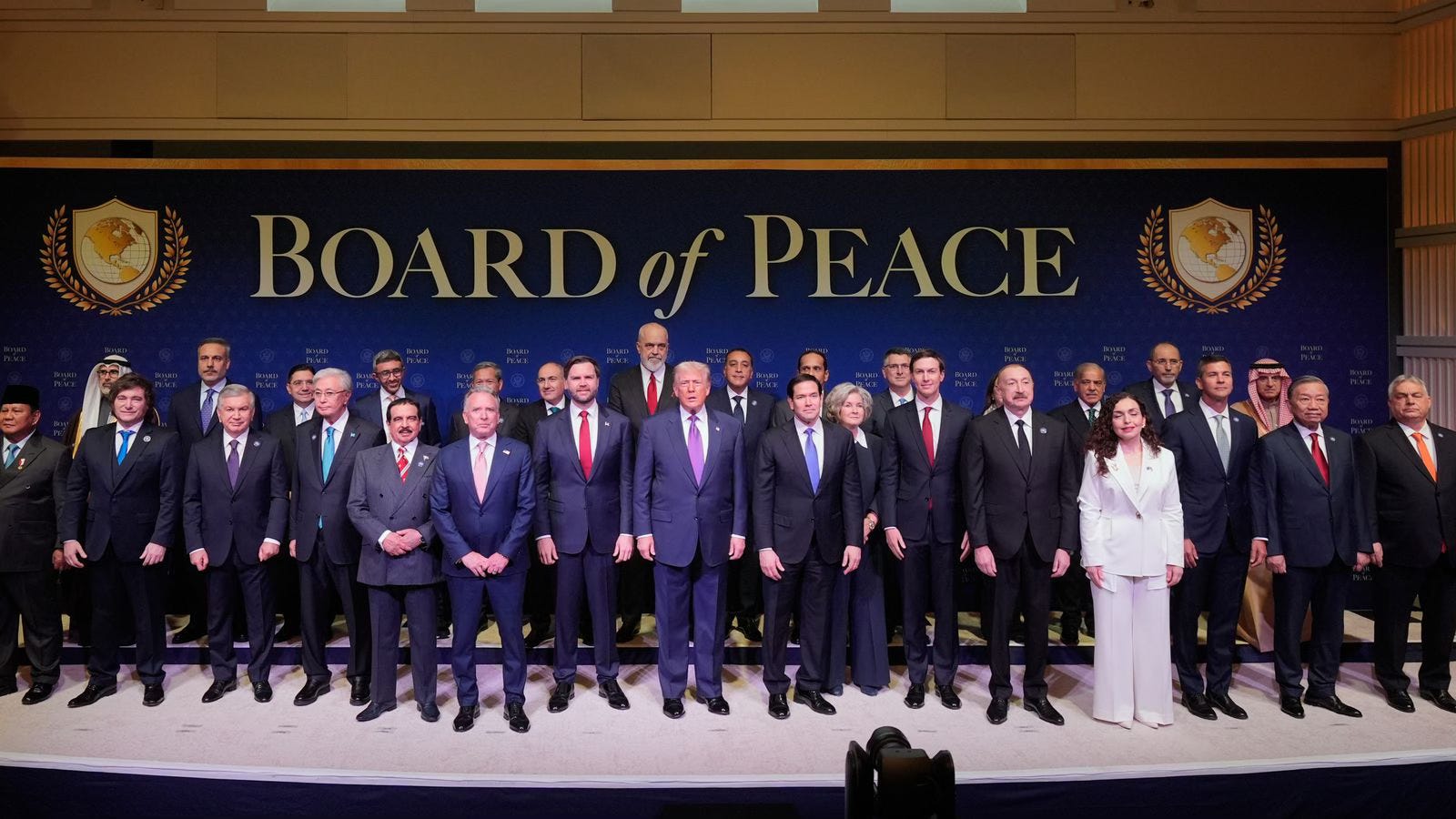
The basic modus operandi of Trump & Co. is one of expanding the scope and power of the clique of hyper-elites at which Trump & Co. are at the center. Look literally at the images of the Board of Peace gathering last week. That says it all.
Israel of course has its own reasons for wanting to topple the Iranian regime, more realpolitik in nature.
Different motives, common end.
Why does the Trump court want access to power in Iran? Part of what is different about neo-royalism is that personal access is its own end. We are used to thinking in traditional diplomatic terms—power is about particular strategic interests. That’s not what is going on here. In neo-royalism, power is about personal connection. What Trump imagines is a new Iranian government that is in relationship with him and in some way dependent upon him. Just like Venezuela is shaking out (and Mexico, and Cuba soon, etc)
This is old European royalism redux. The 16th to 18th centuries are the places to study for precedents, not the Cold War.
I should have said, perhaps, that it is old European royalism redux, but under the terms of modern elite power. As the Epstein Files have shown us so clearly, among elites and hyper-elites, one’s power and influence is directly correlated with the scope of one’s network, and the shape of that network relative to particular persons. In the war in Iran, Trump & Co. are busy building their network. Whatever else they might think they’ll gain—oil, riches, or even “peace” in the Middle East—is secondary to the primary goal of expanding the network of power at which they are at the center.
I have no idea how the war will play out. None. It could be over before the day’s over, in which case my subtitle “America’s first neo-royal war” above is premature.
But it could well go on for months, even years. That all depends on Iran and their allies. Regardless, Trump has taken a huge gamble—and for reasons that have little to do with the “national interest.”
I am confident that this is not going to play out well for Trump on the domestic politics front, but I am just not sure that matters to him that much. He’s not planning on being president past 2028 (despite whatever theories are out there). He’s looking to build a highly personalized empire in the mean time. He has a concept of greatness with plenty of historical precedent.
He may use the war at home to attack the opposition as traitors. He may attempt to suppress speech. He may use the war to corner Democrats keeping funds from the Department of Homeland Security until ICE reforms are put in place.
But we are in a world of uncertainties now. Part of what’s powerful about kings is that they are unpredictable.
Be true,
Ned