

I spent much of last week in the state of Mississippi, which is enormously complicated and frequently depressing. I went down there to try to learn from some great people the “secrets” for sustaining Good Work on behalf of others without becoming bitter, cynical, or disenchanted. Next week, I am planning on writing here at Civic Fields about what I took away from my time in Mississippi with these folks.
This week, however, I want to write a follow-up to the open letter to Q of QAnon that I published here last week. The gist of that letter was that while the conspiracists among us were closer to the truth than I and many others imagined, right down to the pedophilia ring, the populist faith in the power of the Great Man to save the day is as wrong today as it has ever been.
I have been making a case here over the past few weeks that old-fashioned democracy is a surer and better means of security than we might imagine, as well as an effective means of countering corrupt, decadent, and out-of-control power. Democracy can deliver on populism’s dreams. This is not a pipe dream.
But I continue to feel alarmed and disgusted at what we are learning in and through the Epstein Files. The problem ordinary people in this country face is far more severe than an unruly president with an out-of-control domestic militia at his command. And it is more than even a horrific pedophilia ring made to satisfy the perverse lusts of brute millionaires.
We are dealing with a class problem.
Recently, Anand Giridharadas, a journalist who has spent much of the last decade covering the hyper-elites, did an interview with Ezra Klein. Near the end of the interview, in a moment of hard-earned clarity and passion, Giridharadas described the class problem in a nutshell.
It is best listened to (here’s a gift link), but I will quote here at length some of what Giridharadas said. He and Klein are talking about Kathryn Ruemmler, the former White House chief of counsel under President Obama and, until recently, a high-up attorney at Goldman Sachs (making $20 million per year). Ruemmler was also one of Epstein’s closest confidants through all the violence, corruption, horror, and raping.
Giridharadas states,
I think a lot of people listening to this (podcast) live downstream of people like this (Kathryn Ruemmler). All you may know on a day-to-day basis is that your pay doesn’t feel like it’s enough, or the adjustable-rate mortgage you got feels like it’s screwing you over, or your union doesn’t have the leverage it used to have, or your kid’s school keeps having these funding cuts, and you’re really scared for whether your kid is going to be able to make it in this new economy, or A.I. is going to [take their jobs]—and you’re just swimming in the muck.
[People like Epstein and Ruemmler] are the people deciding upstream how you live: what your pay is like, what kind of companies, the quality and timber of the companies you end up working for, what kind of pension you have or don’t have, what kind of prices you pay or not, whether you get foreclosed on or not because their bank bets against itself in the run-up to a financial crisis and imperils the whole system.
You are just trying to swim through. And you don’t normally get a glimpse of how these people talk among themselves. This is a glimpse, and it turns out to not be particularly brilliant, not be particularly insightful. They don’t know a bunch of stuff that you don’t know.
They’re literally gliding from jokes about how one of them used to be a pedophile, to advice (from Epstein to Ruemmler) about taking an attorney general job, to her (Ruemmler) requesting an Hermès Apple Watch band as a gift from Epstein.
This is what they’re doing as you struggle to just eke out your life.
Giridharadas knows these people. He talks to them. He interviews them. He writes about them. This is not a man looking, like me, at the problem from afar. He’s worked his way as an investigative journalist into the heart of the darkness of the hyper-elite. And they are not special. Often, they are far worse than special. They are self-centered, entitled, and perverse to the point of pedophilia, or at least joking about it.
Giridharadas is equally right about their inordinate power. They, more than Congress, set the tax rates. They determine the median wage of American workers. They decide on how much in the way of benefits and retirement is sufficient for most of us. They crank up the stock market and then blow it up, leaving the retirement accounts of millions in shambles. And all the while they knowingly feed us the spectacle of “culture wars” on social media and cable news—as if there is any real daylight between Steve Bannon and Kathy Ruemmler, Elon Musk and Lawrence Summers. It is an avaricious and amoral class consciousness that binds them together, not an ideology, philosophy, or politics.
What to do?
At another poignant moment in his interview with Klein, Giridharadas talks about a conversation he had with Laurie Tisch, the uber-wealthy sister of New York Giants’ co-owner Steve Tisch. Laurie Tisch is an unusual character, for she—far more than most in her class—seems to recognize the wrongness of it all. When Giridharadas, therefore, pushed her on what to do, she responded, “Revolution, maybe.”
Revolution, maybe.
Giridharadas himself suggested as much, telling Klein:
I’m not encouraging any particular approach here, but I think it’s revealing that someone in the heart of that world (like Laurie Tisch) ultimately is like: It’s very difficult to ask us to be different from the way we are when this is the power distance, when these are the incentives, when this is the way politics works. It’s very, very difficult to get (ultra-rich) people to behave contrary to the way the system is encouraging them to behave and allowing them to behave.
So, a revolution maybe?
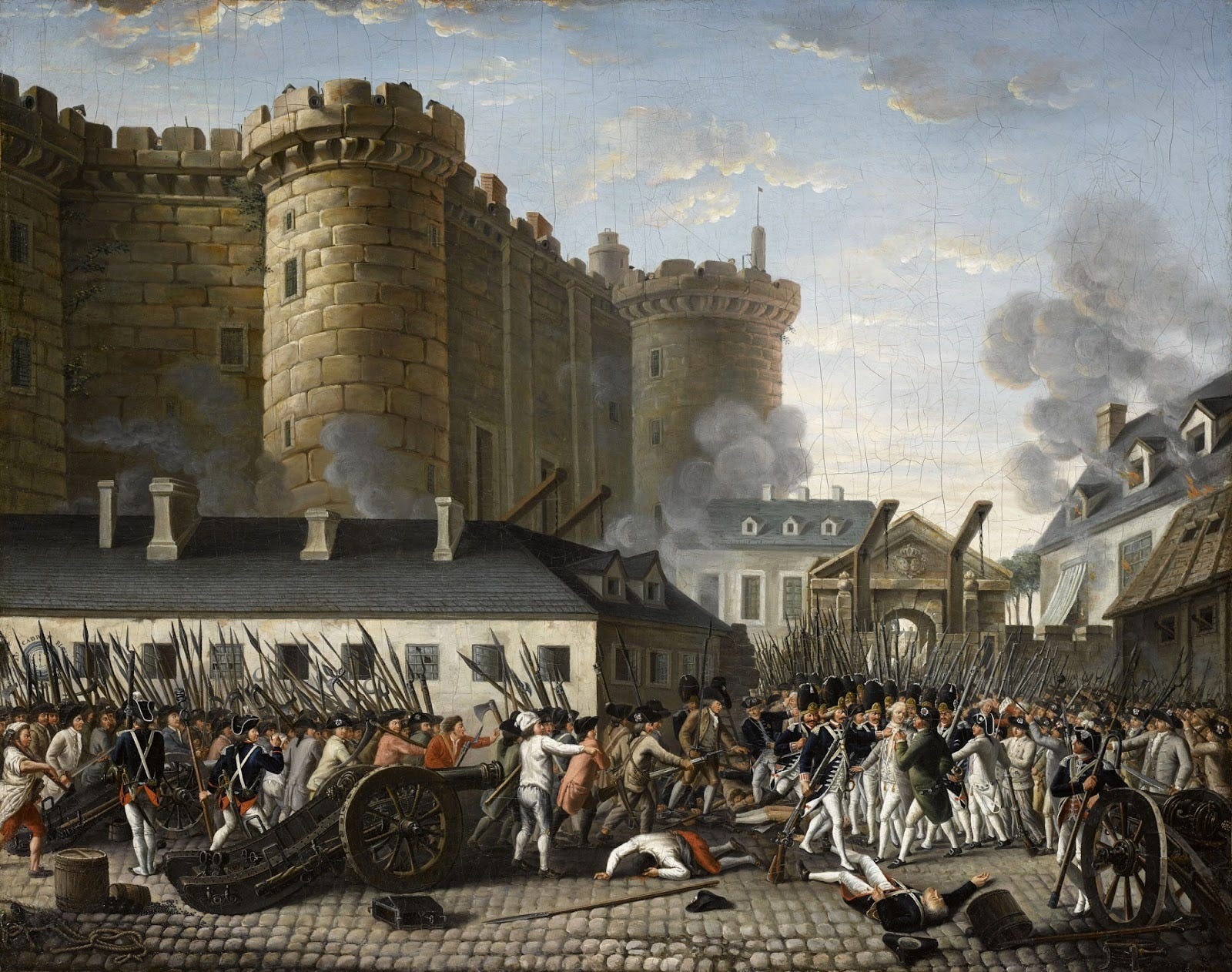
I am, among other things, a student of revolutions. I am currently writing about both the English and French Revolutions. I also take part in some local community efforts in which my fellow citizens, energized by opposing the fascistic Right and informed by the academic Left, talk of revolution. And I think that the problems before us—the massive wealth and power inequalities (I just got back from the state of Mississippi!), the lawless violence of ICE, the blatant lies coming from the White House on almost a daily basis, the extraordinary corruption of the Trump family and their crony partners, and the fast fall of the infrastructure of American civil society—demand something of revolutionary proportions. I join here those who are utterly fed up with the ruling class—big donors be politically damned! They all need to have their egos, their fortunes, and their power cut down to size.
Yet, the reality is that a revolution is simply not feasible, at least not a democratic one, at least not under these conditions. The overwhelming monopoly the state has on violence is just too great. We are not dealing with the king’s calvary and foot soldiers. We are dealing with deadly drones, precision-guided missiles, electromagnetic weapons capable of cutting off all our communications, and cooperation between Big Tech and the Department of Defense.
The only thing that would result from a revolution in the United States, were it to happen, would be a new—and quite likely far worse—form of oligarchic rule, something on the order of a military dictatorship. And what we have now is, in fact, better than a military dictatorship. I don’t want fat kings, but I’d take them any day over dictators. Give me liberty, or give me Louis XVI. Just don’t give me Stalin or Suharto.
Therefore, I think we need to take the long, deliberate, determined, and thorough road of reform, not revolution. I think this road needs to begin simultaneously in our neighborhoods and with our legal institutions (the law schools, the courts, and the legislatures). We can argue about the political effectiveness of violence (I am dubious), but whatever is to come, if it is to be better than the current situation, it needs to be rooted in a combination of neighborly solidarity and the rule of democratically controlled laws.
That’s possible. Even quite possible. Democracy is capable of controlling and constraining elite power. It is capable of chopping down their powers. But it will take more than outrage or calls for revolution. It will take the generous long-term work of devoted democratic citizens.